
Imagine a realm where creatures with iridescent hair lie, their glowing locks pooling into waterfalls that cascade down colossal trees. Next to them, dozens of suspended jellyfish illuminate the sky, and below, 10-foot-tall mammals roam the ground. The strange forest then gives way to a city filled with an infinite number of interconnected buildings, each one stranger than the last. In what world would you find vents with Victorian interiors hidden behind them or offices with walls made entirely of books? A bizarre science fiction novel would probably be your first guess, but everything I’ve described is 100% real. Located in Denver, Meow Wolf’s reality-warping exhibit blew me away.
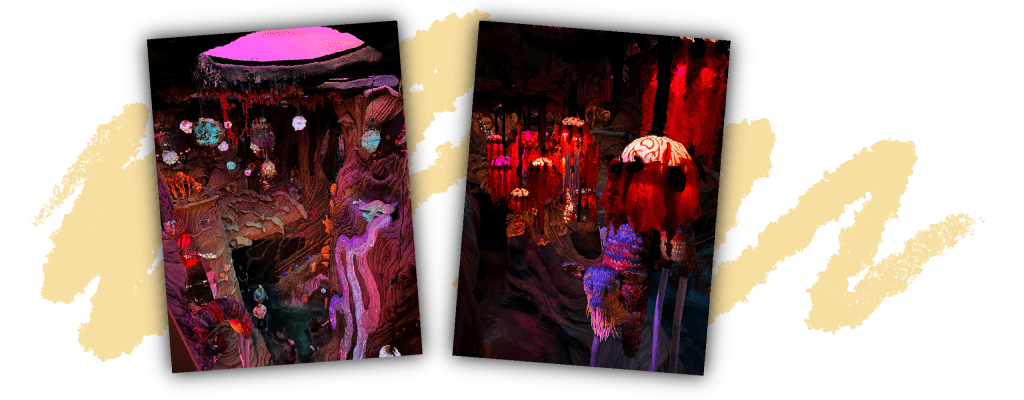
This year, my family went to Colorado for our spring break trip. On our last day, we checked out an art exhibit called “Meow Wolf: Convergence Station.” Not having done much research, we expected it to be a typical gallery. However, within seconds of entering the exhibit, we realized it was anything but.
The concept of the exhibit was essentially connecting Earth to an alien world. Consisting of sections called C street, Ossuary, and Eemia, the exhibit was massive but incredibly detailed. From the small Petri dishes containing “Fairy Flu” to the security cameras in the back room of the salon, no part of the exhibit was left half-done. Even the TV in the dining area played alien news instead of regular “human” stations. I was fully immersed in the intricate world that Meow Cat had created, almost forgetting that it was just an art exhibit. My otherworldly experience in Denver made me think: “What are some other examples of immersive art, and how long has it been around?”
I looked into some examples of immersive and interactive art throughout history, and here are a few of my favorite finds:
1. Great Hall of the Bulls by the Paleolithic peoples in France (16,000-14,000 B.C.E.)

Despite how immersive art is commonly associated with the modern day, the Great Hall of the Bulls dates all the way back to the Paleolithic Age. It is an extraordinary cave filled with paintings and etchings of animals, such as deer and bison. According to archaeologists, people in the Lascaux caves may have used flickering light from fireplaces and lamps to give the images a moving effect. Other experts speculate that music and performances took place in the caves. With a marvelous combination of form, light, and sound, I’d imagine the experience to be magnificent, albeit a little frightening.
2. Rotary Glass Plates by Marcel Duchamp (1920)

Jumping to the 20th century, the rise of technology allowed artists to create works like Rotary Glass Plates. The piece consists of five painted plates that move to create the illusion of a single circle when the viewer turns on a machine. To see the art, viewers have to interact with it, which I find super creative.
3. La Cathédrale d’Images by Albert Plécy (1975)
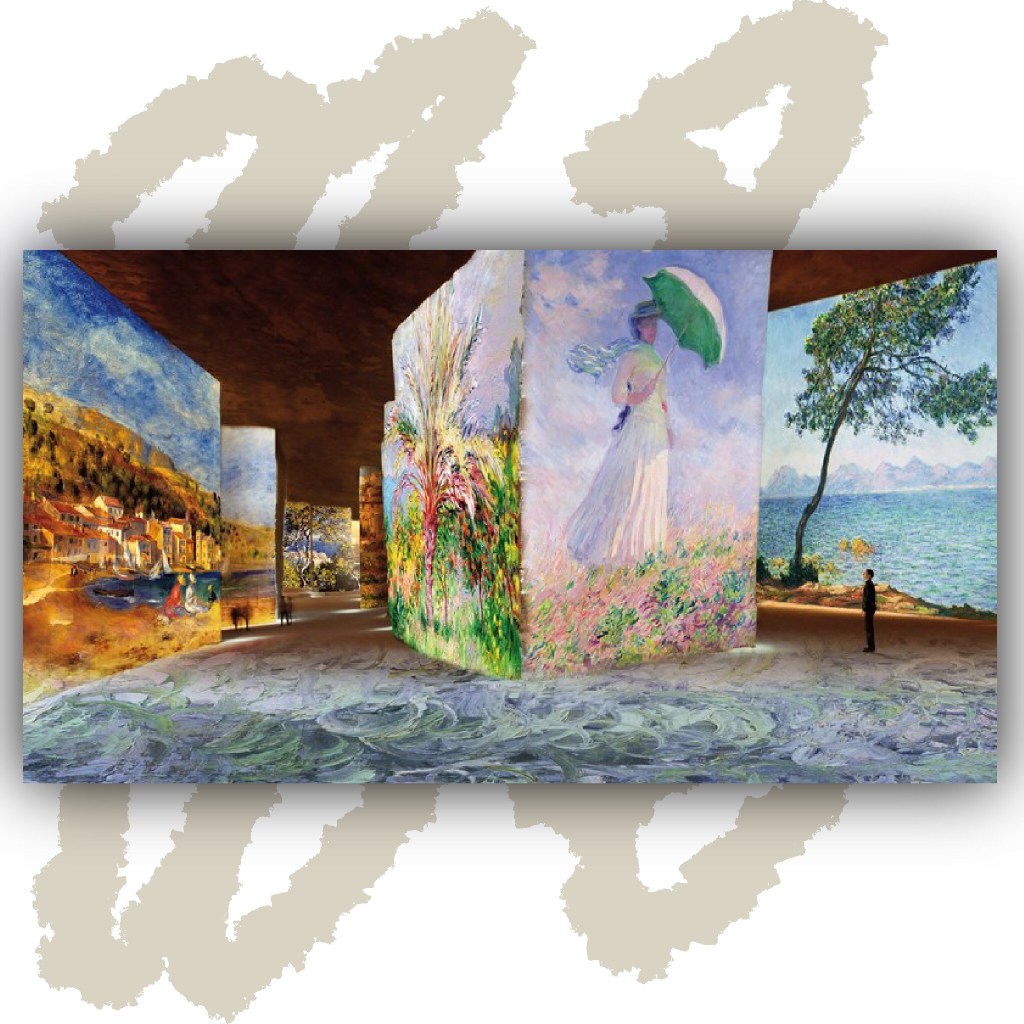
This one is especially gorgeous. An international hit, La Cathédrale d’Images consisted of frescoes cast by carousel projectors onto the walls of the white limestone quarries in Les Baux-de-Provence. Not only was it visually stunning, but the artist, Albert Plécy, also orchestrated an entire soundtrack to accompany it! Now called Carrières de Lumières, people can still enjoy Plécy’s stunning concept today.
4. Aspects of Gaia by Roy Ascott (1989)

During the Information Age, new technology allowed for innovations in art. One fascinating exhibit during this period was Aspects of Gaia by Roy Ascott. It featured computer screens and monitors with images of the earth. It also had a trolley that took viewers on a ride through a dimly lit tunnel decked with foliage and LED screens. The surreal feel of Aspects of Gaia reminds me of the Meow Wolf exhibit we visited: strange, thought-provoking, and very cool.
That’s what makes immersive art so appealing. Instead of viewing from a third-person perspective, sucking the viewer into the art provides a sensory experience that traditional displays simply can’t give. And this alluring art form is only becoming more popular. Exhibitions like “Van Gogh: the Immersive Experience” and “Frida: Immersive Dream” have recently popped up, showing the rise of a trend I’m all in for. After all, why just look at art when you could live it?
References available upon request
 the aesthete
Leave a comment