
It hasn’t felt like a true Texas summer until this week. Yesterday, when I walked out to the car, I was hit with a wave of suffocating warmth. “Perhaps studying at the park wasn’t the best idea,” I thought. Oh well, after days spent indoors, it was about time for me to get some sunshine. I was well equipped for the heat, however, I still felt miserable with beads of sweat dotting my neck and how my clothes seemed to stick onto my back. It certainly wasn’t the best environment to work in. Who can get anything done when nature just doesn’t want to cooperate?
Well, lots of people, actually.
The Egyptians made enormous pyramids despite dwelling in a desert. On the other extreme, civilizations with a polar climate were able to create great things as well. All in all, work can still be done under suboptimal conditions.
Extreme climates don’t inhibit artistic creation, but they impact it nonetheless. In this post, I will explore how differing climates affected the art of three civilizations: Inuit, Ancient Egyptian, and Polynesian. I chose to research older civilizations because as the world modernizes, materials and methods used in art start to become more similar, making for a harder comparison.
Okay. Why don’t we start with a civilization facing the opposite of my current problem: the Inuit. How does art reflect the frigid weather and scarce resources of the polar climate zone?
Polar Climate: Inuit Art
Living in a climate that allows for little vegetation, Inuit people used parts of animals as materials for art. Examples of commonly used materials include bone, such as walrus tusk or caribou antler, hides, and baleen. Here is an incredible woven baleen basket:

Although there weren’t many shrubs around, there certainly was stone. Inuit people used stone and ivory to make sculptures, like this one:
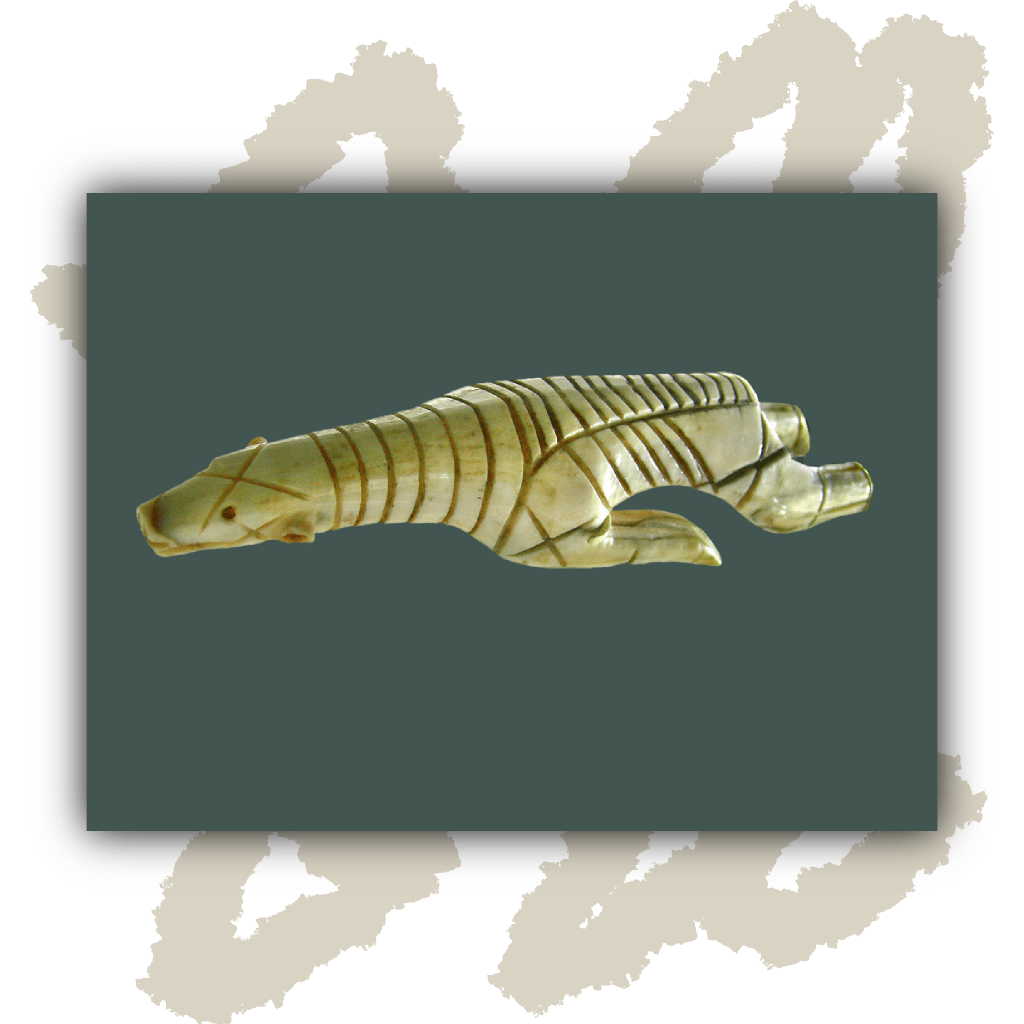
It’s a polar bear! Much of Inuit art focused on animals, hunting, and lifestyle in a freezing environment.
Alright. I’m feeling a bit cold now from talking about all these polar bears and low temperatures. Let’s switch to something a bit warmer. Aha! Polynesian art.
Tropical Climate: Polynesian Art
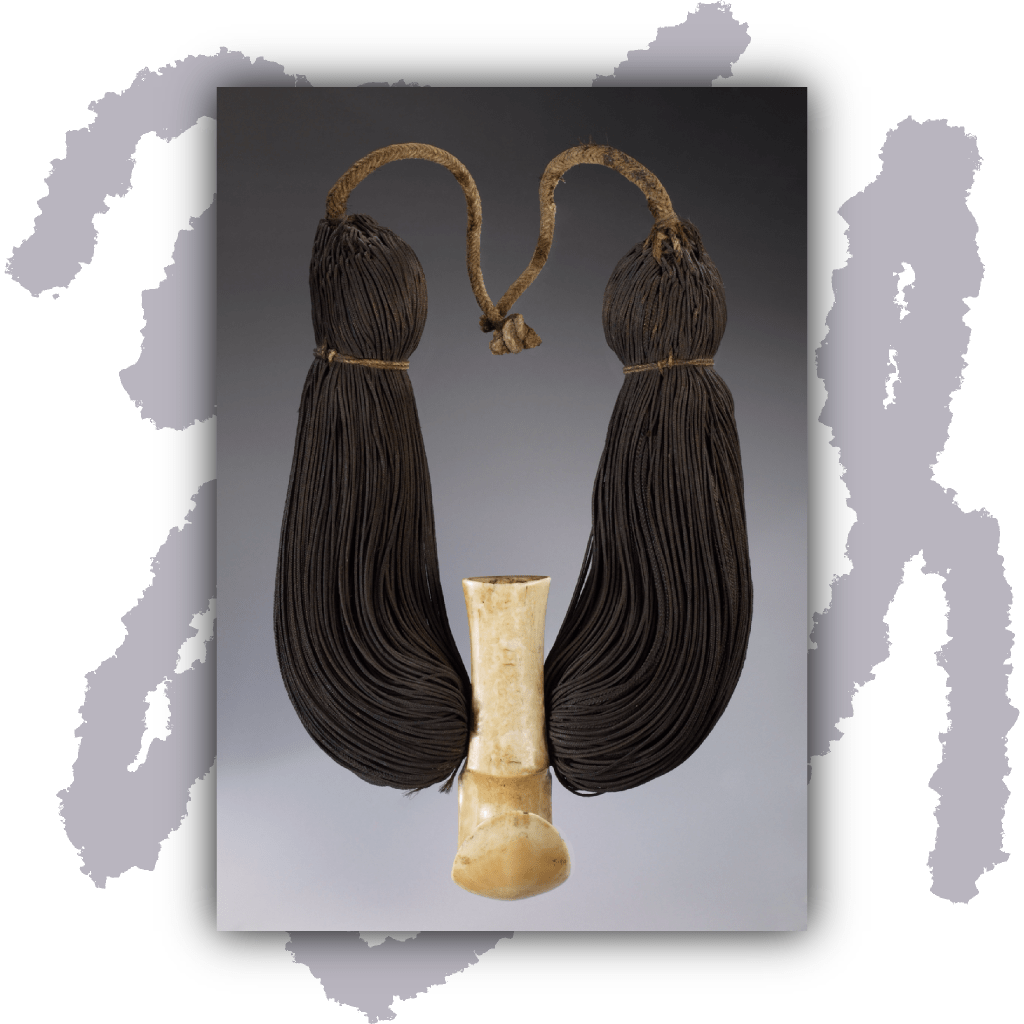
Like Inuit art, Polynesian art also focused on everyday activities. In the case of tropical islands, that was fishing. For example, whale teeth were often used in art. Here is a super cool whale-tooth necklace with human hair! It is called a “lei niho palaoa” and it was an accessory worn by nobility.
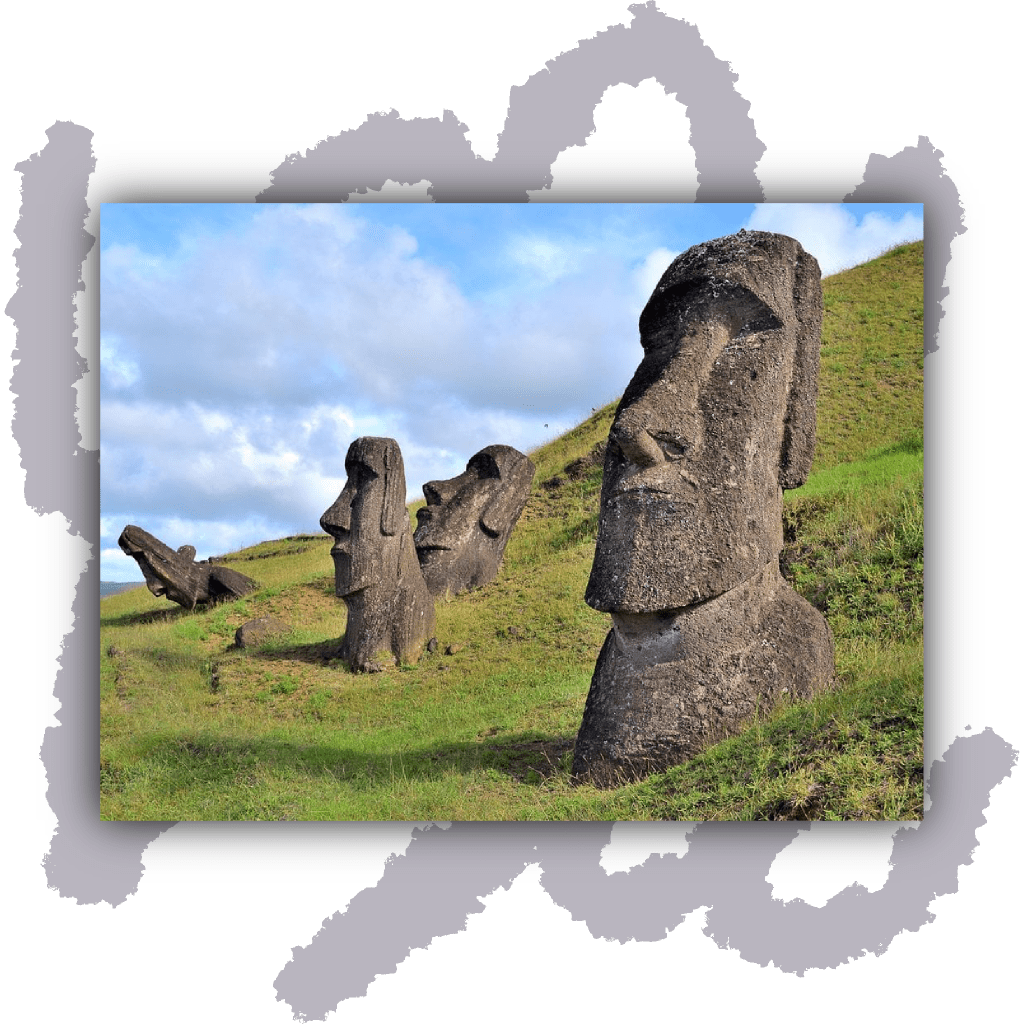
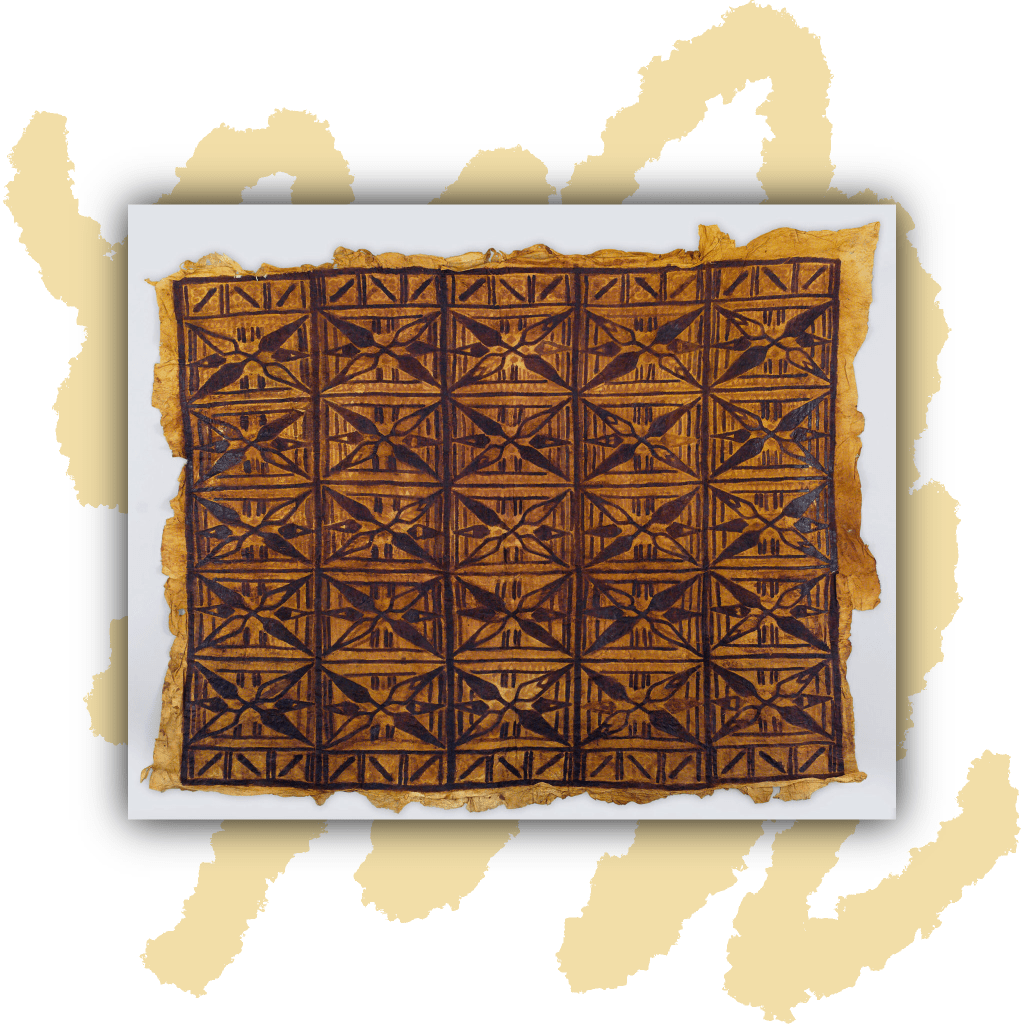
As one can expect, natural resources play a big role in art. Soft volcanic stone and paper mulberry trees are natural resources that can be found in the tropical climate zone, and Polynesians used them in their art. Take a look at these moai statues:
And this siapo:
Now we’ve explored the warm and the cold, but how about the dry? Our last stop is Ancient Egypt.
Arid Climate: Egypt
Limestone was a natural resource in Egypt. Egyptians used limestone to carve incredible sculptures, including this one of Nefertiti:
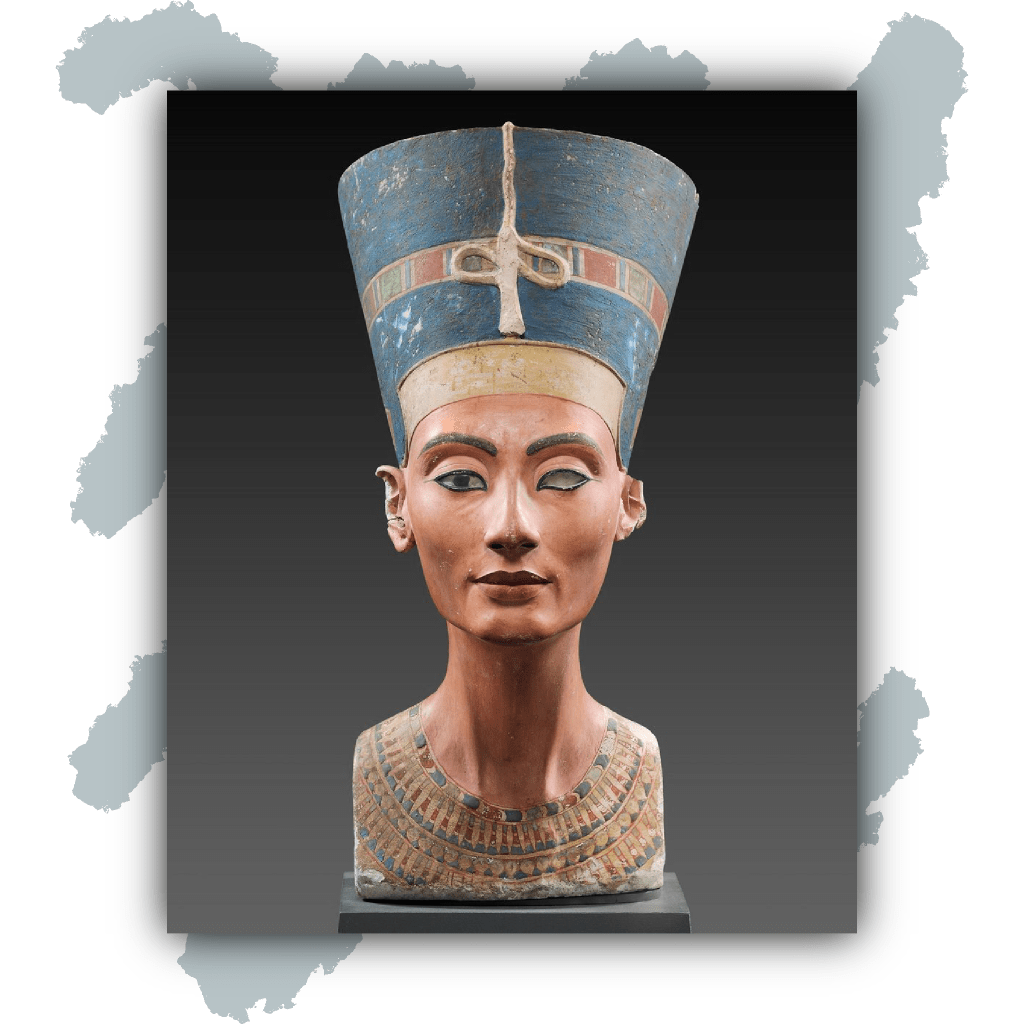
They also used the sand they had to make glass. Look at this fun fish vase!

Just like the Inuits and Polynesians, Egyptian artists were heavily inspired by their environments. The Nile was an especially important Egyptian landmark. Egypt falls under the “arid” climate zone, meaning that it is extremely dry. Because of this, the Nile River was a central part of Egyptian civilization. Egyptians featured the Nile in their art for this reason, and also because of its spiritual significance. This faience hippo reflects the river theme:

(Faience is a self-glazing ceramic made of quartz or sand crystals, commonly used in Ancient Egypt)
Lastly, Ancient Egyptians had to develop pigments that could withstand strong sunlight given the climate.
And that wraps up our mini-tour across three civilizations with different climates! It’s clear that climate shapes environments and lifestyles, which in turn influences art. Without a variety of climates, we would not have such unique works of art to look at today.
Texas weather, I guess you’re not so bad after all.
References
“Inuit Art.” Wikipedia, 8 Mar. 2023, en.wikipedia.org/wiki/Inuit_art#History. Accessed 12 June 2023.
“Material Matters: The Media of Inuit Art – Inuit Art Gallery.” Feheley Fine Arts – Inuit Art Gallery, 10 June 2000, feheleyfinearts.com/material-matters-the-media-of-inuit-art/. Accessed 12 June 2023.
“Oceanic Art and Architecture – Polynesia.” Encyclopedia Britannica, http://www.britannica.com/art/Oceanic-art/Polynesia.
Calvert, Amy. “Materials and Techniques in Ancient Egyptian Art – Smarthistory.” Smarthistory.org, 8 Aug. 2015, smarthistory.org/materials-and-techniques/.
Dr. Caroline Klarr, “Hiapo (tapa),” in Smarthistory, August 9, 2015, accessed June 12, 2023, https://smarthistory.org/hiapo-tapa/.
Dr. Beth Harris and Dr. Maia Nuku, “Necklace (Lei Niho Palaoa), Hawai’i,” in Smarthistory, January 17, 2017, accessed June 12, 2023, https://smarthistory.org/necklace-lei-niho-palaoa-hawaii/
 the aesthete