Every corner of the world has seen waves of cultural, technological, and political change, and art has swayed according to these trends. However, despite living in a completely changed world, most of us still embrace our cultural heritage and celebrate ancient holidays. We grow through innovation but are grounded and identified by tradition. Similarly, modern art, while symbolic of the future, still holds traces of the past.
In today’s post, I’ll be pairing ancient works with recent works and exploring how certain artistic elements have prevailed over time.
Shiva as Nataraja (ca. 11th century)
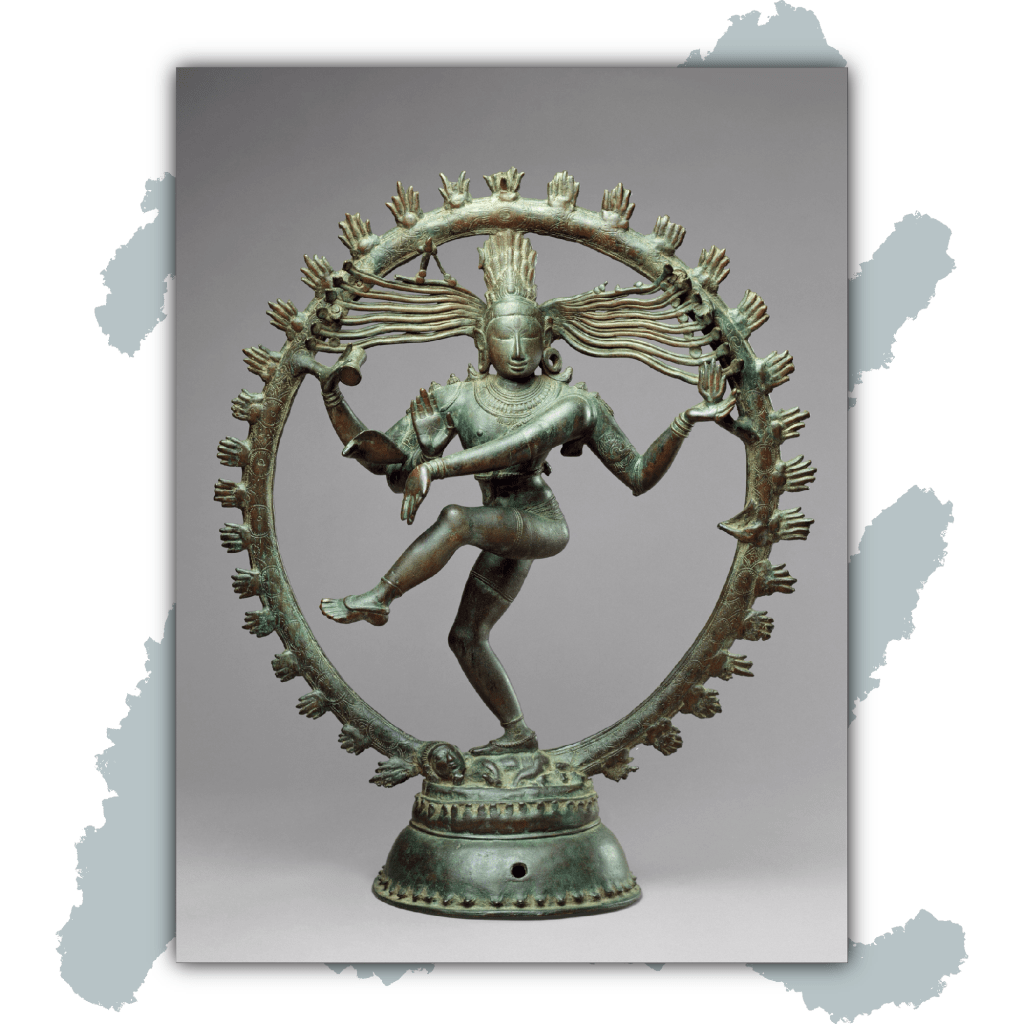
Sanatana Dharma, eternal faith, is a phrase used to describe Hinduism. It’s very accurate, as the beautiful religion has been a central part of Indian culture for over 5,000 years. Known for its recognition of many gods and its magnificent celebrations, Hinduism is a complex and exuberant religion, and these attributes are well-reflected in Indian art.
This mesmerizing copper alloy sculpture was created during the Chola period. The Chola dynasty was a South Indian Tamil dynasty known for its maritime prowess and ornate temples. This artwork is just as detailed, featuring Shiva, the god of destruction, disguised as Nataraja, the god of dance. Shiva is surrounded by a ring of flames symbolizing simultaneous creation and destruction. More symbolism can be found in the sculpture, with Shiva stepping on Apasmara (the embodiment of ignorance). Even Shiva’s hand gestures convey a message. The abhaya madra represents reassurance.
Nek Chand Rock Garden (opened 1976)
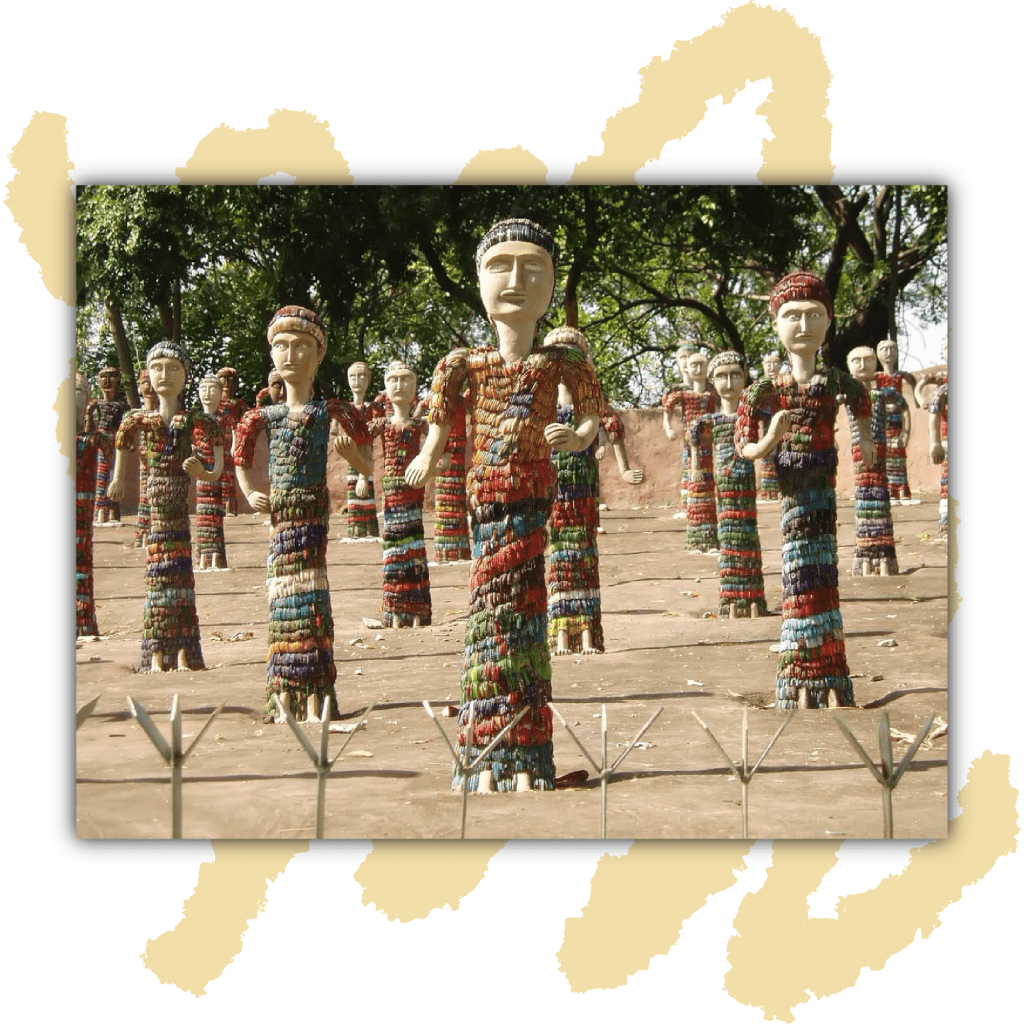
Nek Chand’s Rock Garden also reflects Hindu themes and carries the same intricate quality that Shiva as Nataraja does. The story of this sculpture garden is fascinating. Nek Chand began crafting sculptures in secret, and it was eventually discovered by a government official. Despite the garden being illegal, the government decided against destroying it due to popular support. Today, it is a park open for the public to enjoy. The impressive garden features gods, goddesses, animals, and stunning structures. Chand’s choice of medium is intriguing as well. Instead of traditional sculpture materials, he used glass, bottle parts, tiles, pipes, and more to create this whimsical wonderland.
Discobolus by Myron (ca. 5th century)

Greece, known for pioneering mathematical and scientific knowledge, unsurprisingly houses art centered around idealism. Discobolus is one such example. It was sculpted by Myron, an Athenian sculptor known for his bronze sculptures of athletes and animals. The pose of the disc thrower in Discobolus demonstrates harmony and balance. The thrower himself exemplifies perfection and beauty with his well-proportioned musculature and calm expression. Strength is another key element in Ancient Greek sculpture that is apparent in Discobolus. Although the disc is heavy, the thrower’s face displays no discomfort.
Adam by Rodin (modeled 1880)

Like the subject of Discobolus, Adam is positioned in a visually balanced way that leads the viewer’s eye smoothly through the composition. Adam also displays perfect proportionality and strength with his symmetrical features and defined muscles. Rodin drew inspiration from Michelangelo’s famous painting of Adam in the Sistine Chapel for this piece. In the painting, Adam’s finger points towards God, but the sculpture Adam’s finger points down towards the earth symbolizing shame from humanity’s first sin.
Mask of Tutankhamen (ca. 13th century)

Ancient Egyptians produced many extraordinary works of art that are displayed in practically every museum today. Key features of Ancient Egyptian art include symmetry and rigid form. Artists often incorporated geometric patterns into their work and weaved in many symbols.
Tutankhamen’s golden funeral mask is precise in its details, forms, and angles, and each side of the pharaoh’s face is a perfect mirror of the other. In ancient Egypt, funerary masks were made to help spirits recognize their former bodies. Symbols relating to the deceased person were also included on the mask. For example, the rearing cobra (symbolic of Lower Egypt) and the vulture (symbolic of Upper Egypt) are placed atop Tutankhamen’s nemes to illustrate his rule over both lands.
Air, Sea, and Land by Okuda San Miguel (2018)
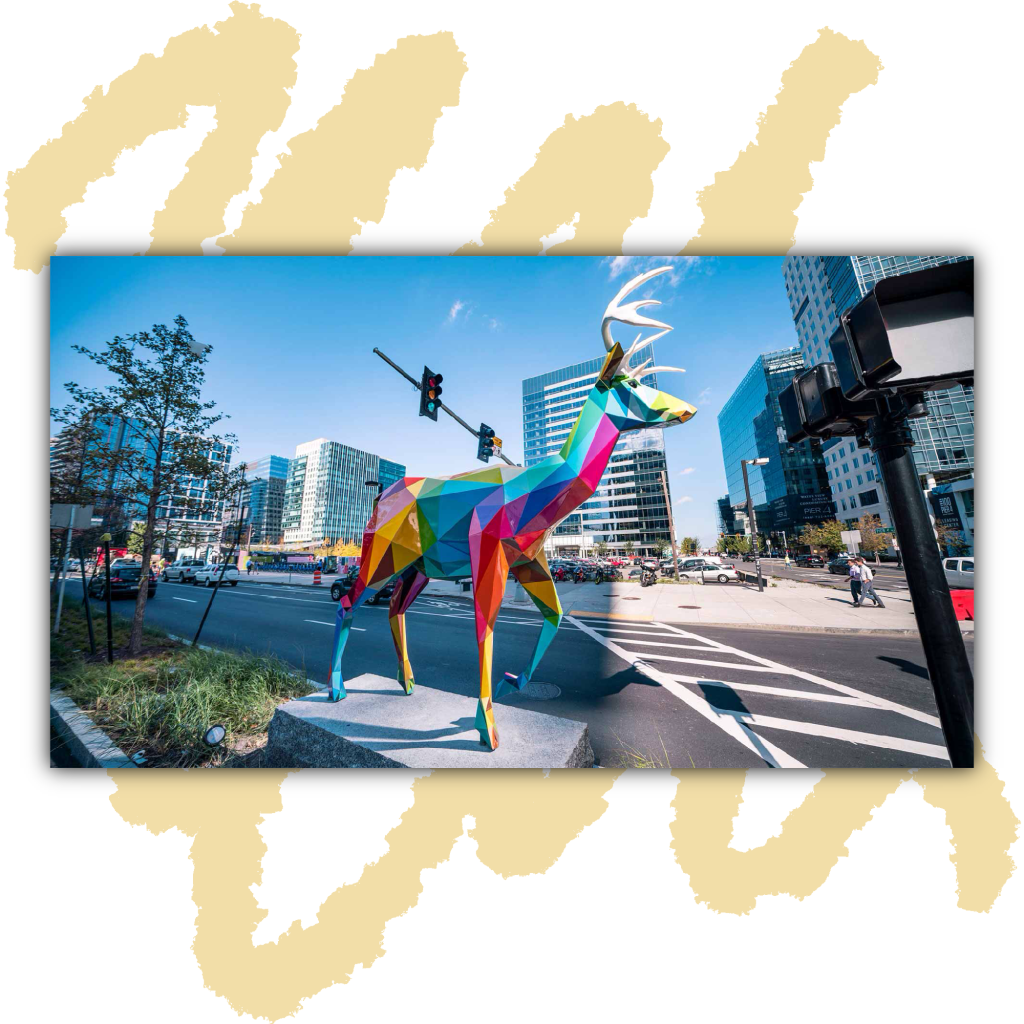
This project for Seaport Boston features seven colorful sculptures, most of which depict animals, a common theme in Egyptian art. The sculptures are made up of triangular pieces joined together to form a jewel-like figure. The themes behind this vibrant installation include the intersection between the human world and animal kingdom and the story of life, both of which are also themes in ancient Egyptian art.
Vase in the shape of a heavenly rooster (18th century)
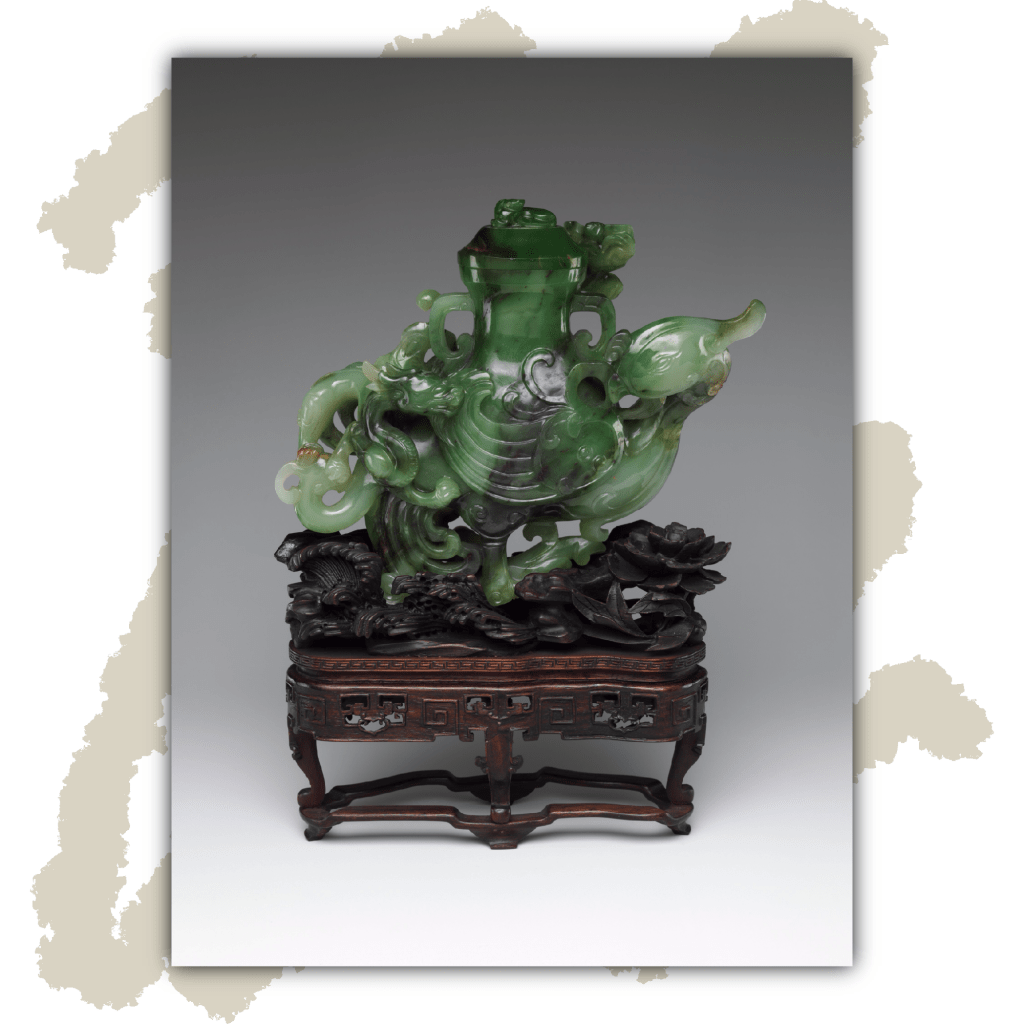
In ancient China, jade was highly valued as it was believed to have transcendental qualities and embodied prized virtues such as wisdom and justice. The sheer beauty of the stone also made it a valuable material for jewelry and art. This vase in the shape of a heavenly rooster was made during the Qing dynasty and the term “heavenly rooster” originates from a Chinese legend about a mythical bird whose call awakens the whole world.
The art of jade carving carries on to the present with artists like Lyle Sopel creating ethereal pieces reminiscent of those made in ancient China. This sculpture of Canada Geese is an impressive display of technique, artistry, and precision.
Canada Geese by Lyle Sopel (2016)

Trends may come and go but certain themes, styles, and mediums continue to flourish despite the passing of time. Artists of the past plant the seeds for artists today, and the artists of today will go on to inspire the artists of the tomorrow.
References available upon request
 the aesthete