
From the Louvre to Cinderella’s slippers to mirrors and mason jars, glass plays an integral role in our daily lives and culture. Not only is it a durable and versatile material, but it is also a mesmerizing art medium. Its crystalline quality and malleability allows for the creation of unique and beautiful pieces that garner attention everywhere. In today’s post, I’ll be exploring various types of stunning glass art.
Mosque lamps in the Islamic world
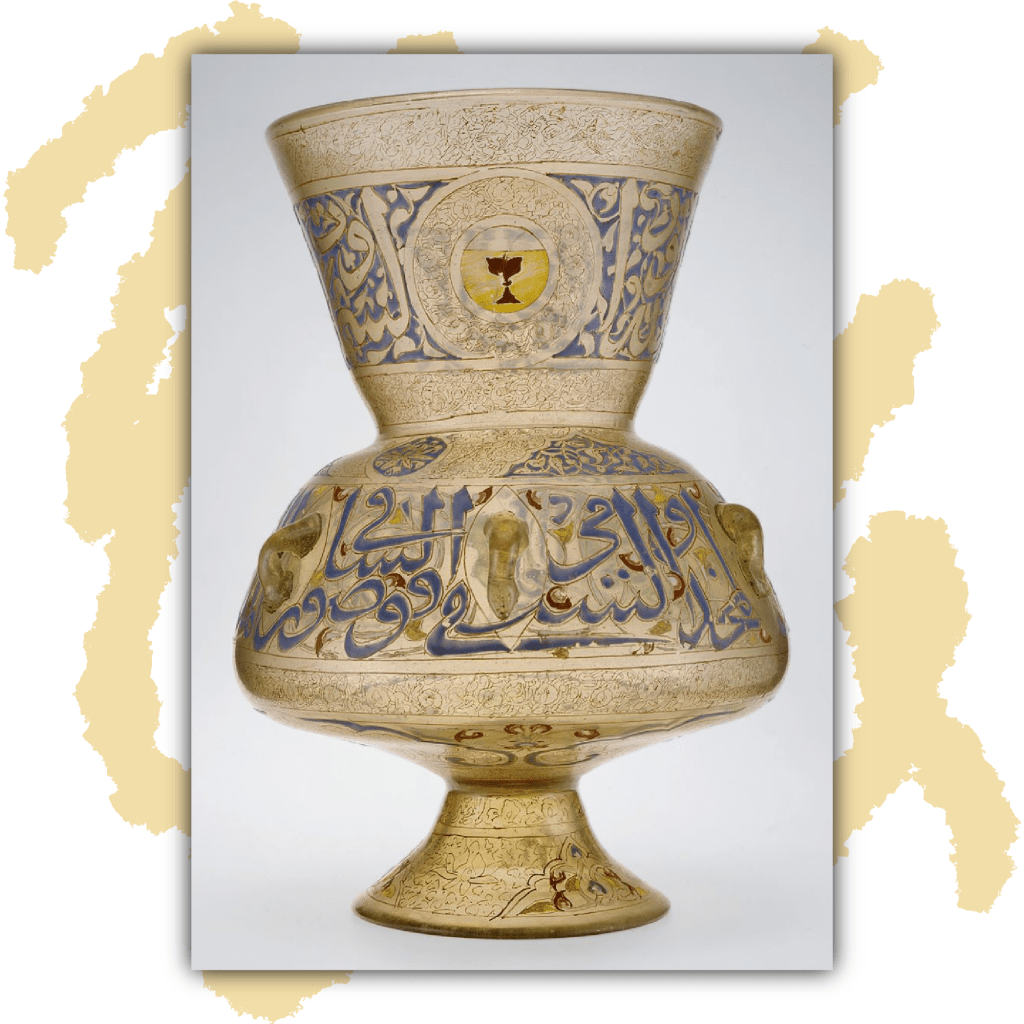
During the Mamluk period in Egypt and Syria, mosques of the sultan were often decorated with ornate glass lamps. These lamps consisted of a foot section and were round on the bottom and horn-like on the top. Additionally, small handles on the sides allowed for the lamps to be hung from the ceiling. Dozens upon dozens of lamps illuminated the mosque’s interior, creating an ethereal and grandiose sight worthy of the sultan. Glass lamps often featured inscriptions with verses from the Qur’an. During the Mongol invasion, motifs from the east, such as the lotus flower, also started appearing on glass lamps. These inscriptions were created with a mixture of gold, enamel, and gum Arabic. The glass itself was blown on a blowpipe and the handles and foot of the lamp were made with a pontil.
Glass beads in Africa
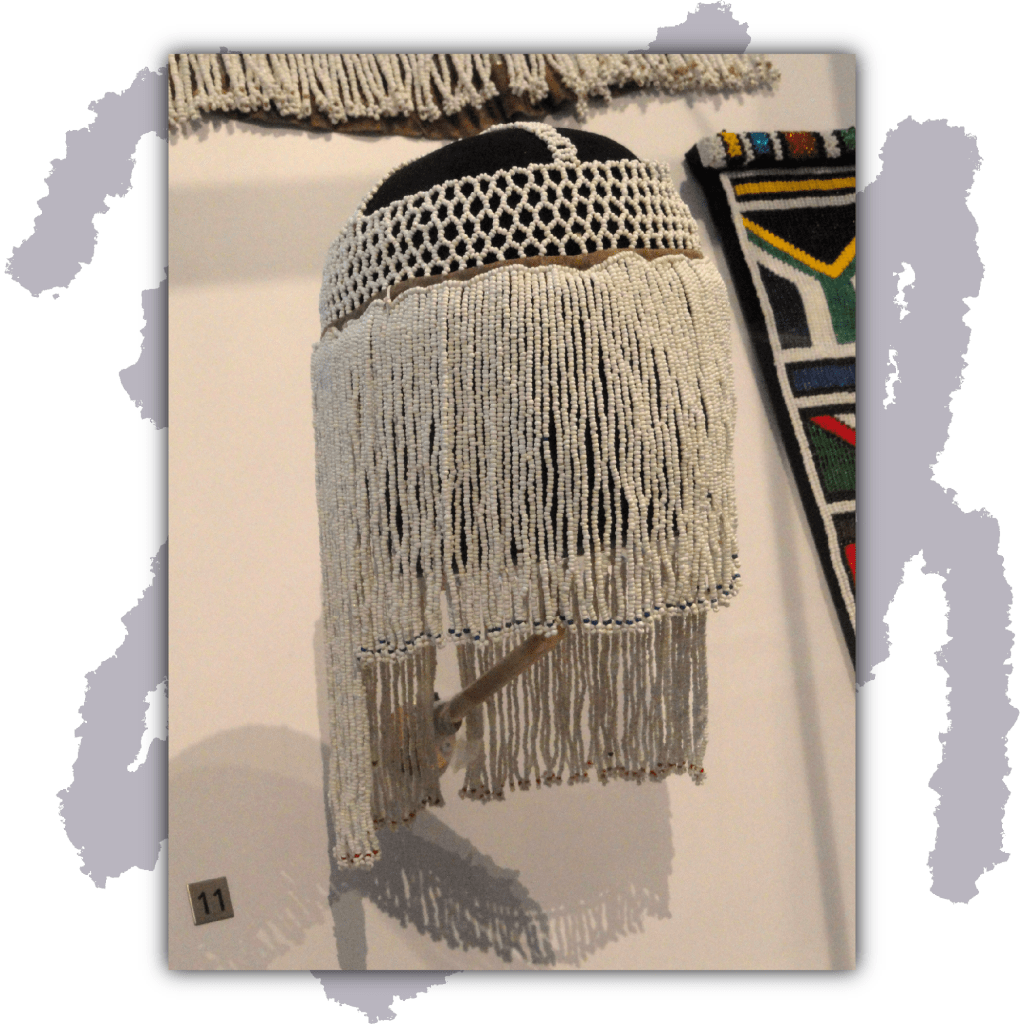
Beads made of bone, seeds, and shells have always been a central element of African art and culture. During the 16th century, trading of glass beads became popular as global trade expanded. African nations commonly traded with Murano, an island in Venice which was regarded as the “capital of glass.” Glass beads were woven into many significant garments. They signified power and wealth, and many kings (obas) wore beaded clothing. Glass beads also marked coming of age and landmark times in a woman’s life. The isiyaya was worn during mariage and the isiphephetu was worn during initiation into womanhood. The Ndebele people of South Africa were especially known for their intricate beadwork and the meaning behind their art.
Venetian glass
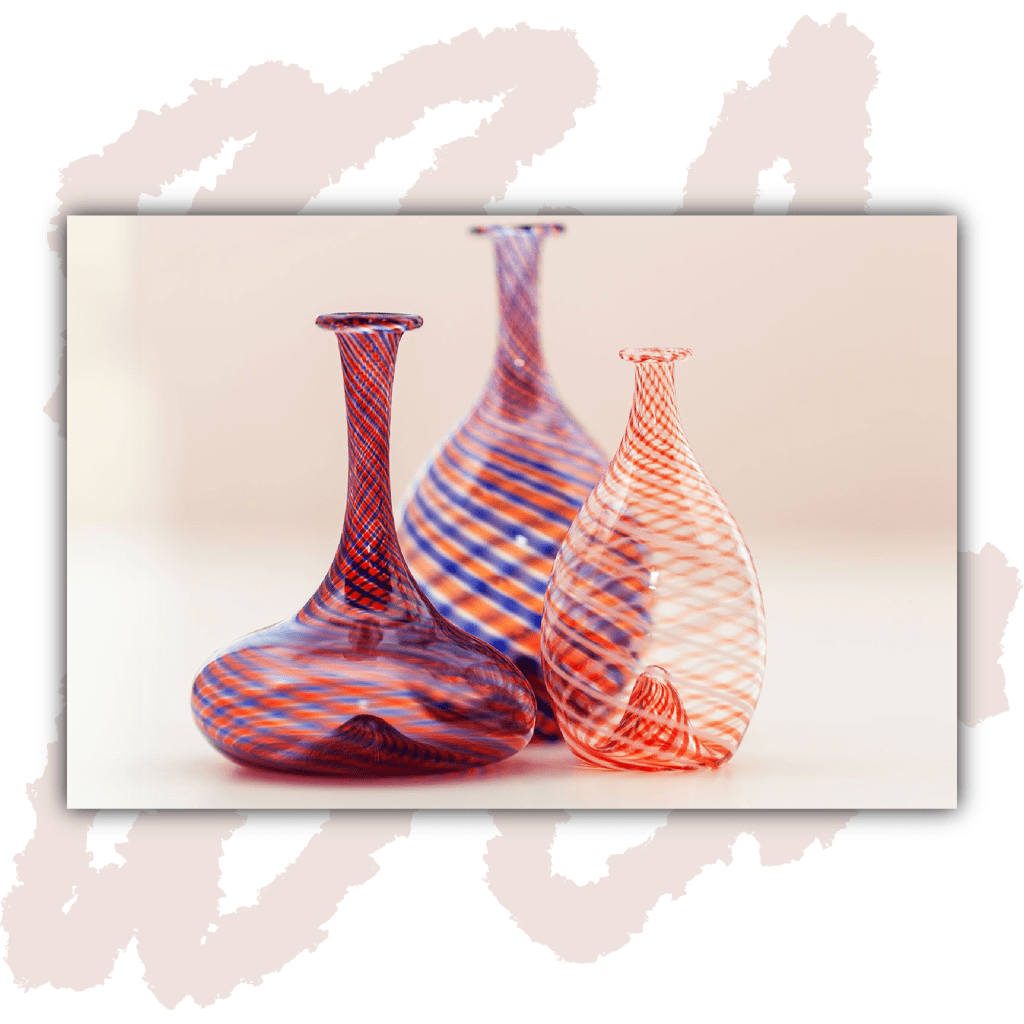
Like the glass beads mentioned earlier, glasses made in Murano were also highly sought after. They were very luxurious and elites everywhere traded for them. Glassmakers in Murano perfected cristallo which was an ultra-clear type of glass that was regarded as the finest glass in the world. There was also lattimo which was a milky-looking glass often incorporated into Venetian glass designs. Glass did not come in just clear or white, but other colors as well. These multicolored rods were fused next to one another in intricate patterns. The vetro a fili style consisted of straight rods while the vetro a retortoli style consisted of rods twisted around one another.
Stained glass
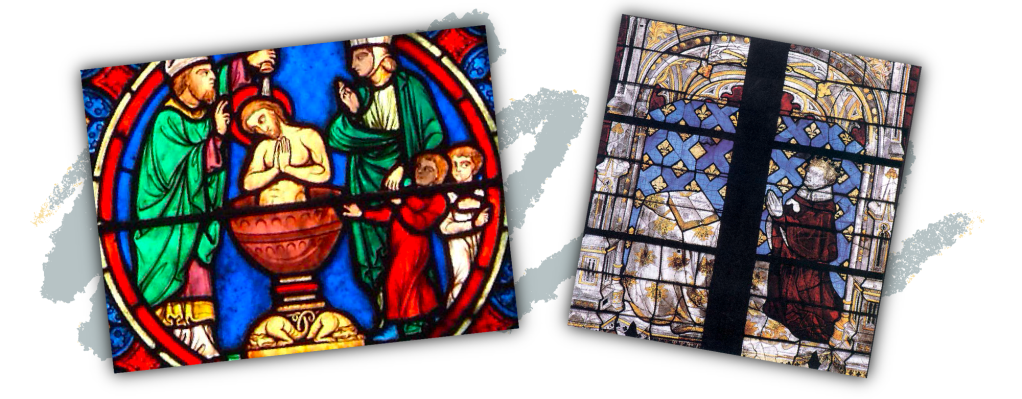
In Europe, stained glass became popular in the Middle Ages. During the Middle Ages, the Gothic style was the preferred style. It was characterized by vivid colors and religious imagery. Gothic style stained glass was often put in cathedrals, and it was revived in the 19th century. Starting in the 15th century, however, Europe saw a switch to the Classical style. The Classical style featured more muted colors and more complex paintings. Also, they were more commonplace and could be found in places other than cathedrals.
Stained glass also adorned many buildings in the Islamic world. However, the designs were more geometric and depicted less people and scenes.
Glass art can take so many forms, each as impressive as the next. It’s amazing to me how, even as far back as the Middle Ages, artists were able to master the complex techniques required for glass art. Thanks to them, we now have millions of magnificent works to admire today.
References
Dr. Ariel Fein, “A glass lamp: illuminating sultan Hassan’s mosque and madrasa,” in Smarthistory, May 4, 2023, accessed June 11, 2024, https://smarthistory.org/a-glass-lamp-illuminating-sultan-hassans-mosque-and-madrasa/.
Green, J. (2018, July 26). Beadwork in the arts of africa and beyond. The Metropolitan Museum of Art. https://www.metmuseum.org/articles/beadwork-in-arts-of-africa-and-beyond
Taylor, J. (n.d.). How African beadwork changed the world – google arts & culture. Google. https://artsandculture.google.com/story/how-african-beadwork-changed-the-world/AwICquz59QfIKg
Fox, M. H. (2017). Beads that Speak: Women and the Language of Ndebele Beadwork from the Krannert Art Museum collection . Beads that Speak: Women and the Language of Ndebele Beadwork from the Krannert Art Museum collection | Krannert Art Museum. https://kam.illinois.edu/resource/beads-speak-women-and-language-ndebele-beadwork-krannert-art-museum-collection
Gudenrath, W. (n.d.). Home | the techniques of Renaissance venetian-style glassworking. Corning Museum of Glass. https://renvenetianstyle.cmog.org/
Britannica, T. Editors of Encyclopaedia (2013, May 30). Venetian glass. Encyclopedia Britannica. https://www.britannica.com/art/Venetian-glass
Wikimedia Foundation. (2024, April 16). Venetian glass. Wikipedia. https://en.m.wikipedia.org/wiki/Venetian_glass
History of stained glass. The Stained Glass Association of America. (2022, December 27). https://stainedglass.org/learning-resources/history-stained-glass
Sowers, R. W. (2024, April 11). stained glass. Encyclopedia Britannica. https://www.britannica.com/art/stained-glass
 the aesthete