
Summer break is finally here, and with break comes vacation! This year, I’m looking forward to going on a road trip with my family to Santa Barbara. It’s going to be short and sweet, as the summer after junior year is a busy time. While I’m excited to spend time with my family on the road, I can’t help but daydream about the summer after senior year. My dream vacation destination is Greece, and my family is planning to travel there summer 2025! Continuing in the summer break spirit, I decided to learn more about Greek art- the subject of today’s post! I’ll be exploring three major periods of Greek art: Archaic, Classical, and Hellenistic.
Archaic period (650-480 BC)
During the Archaic period, Greek art shifted to include more human forms and more proportionate figures. Excellent examples of this trend are the Kuoros and Kore statues.
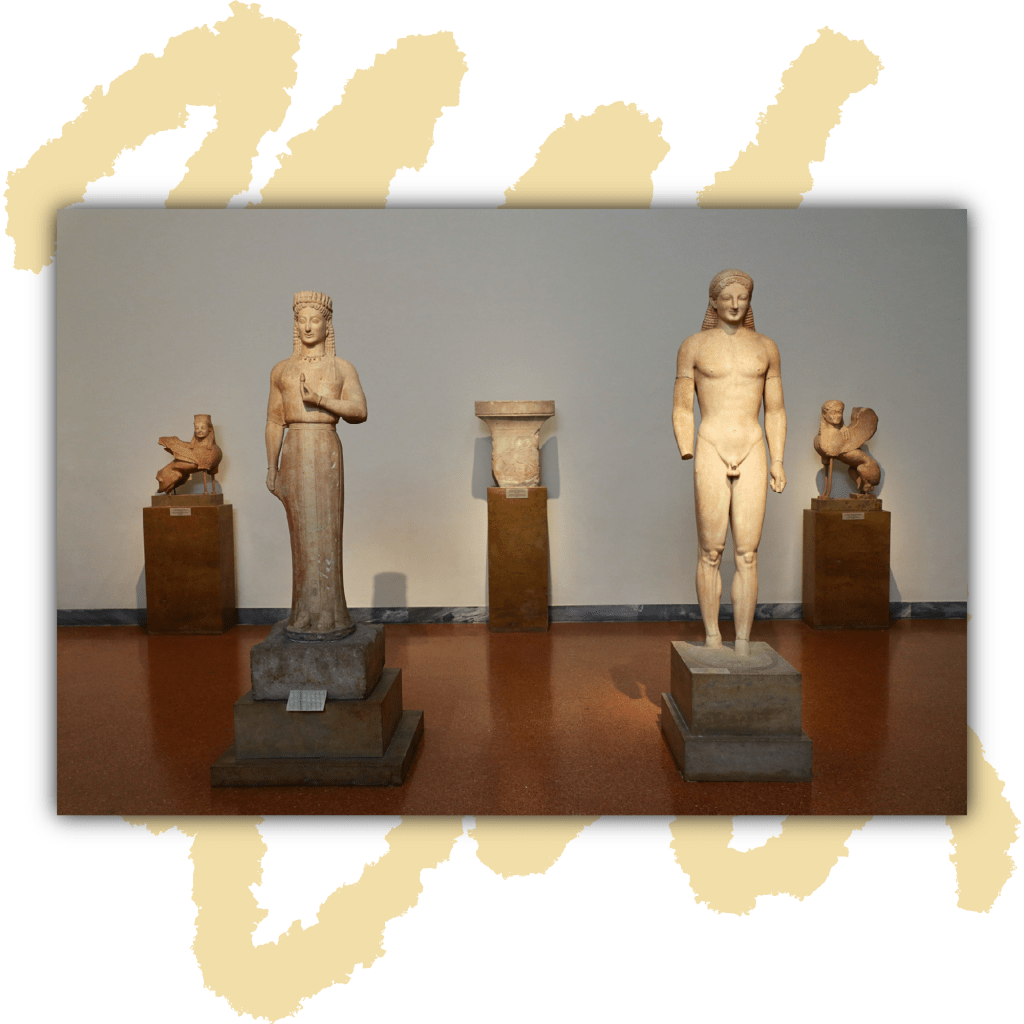
The Kuoros statue depicts a male youth while the Kore statue depicts a female youth. Stylistically, the statues borrow inspiration from Egyptian art. The strict symmetry of the figures and their rigid poses heavily resemble Egyptian monumental statues. Mythological creatures were also subjects of both Greek and Egyptian art during this time. In addition to sculpture, pottery was a common art form produced during the Archaic period. Black-figure pottery consists of silhouettes painted in black and incisions for details. It was the predominant style initially, and then red figure-pottery took its place.
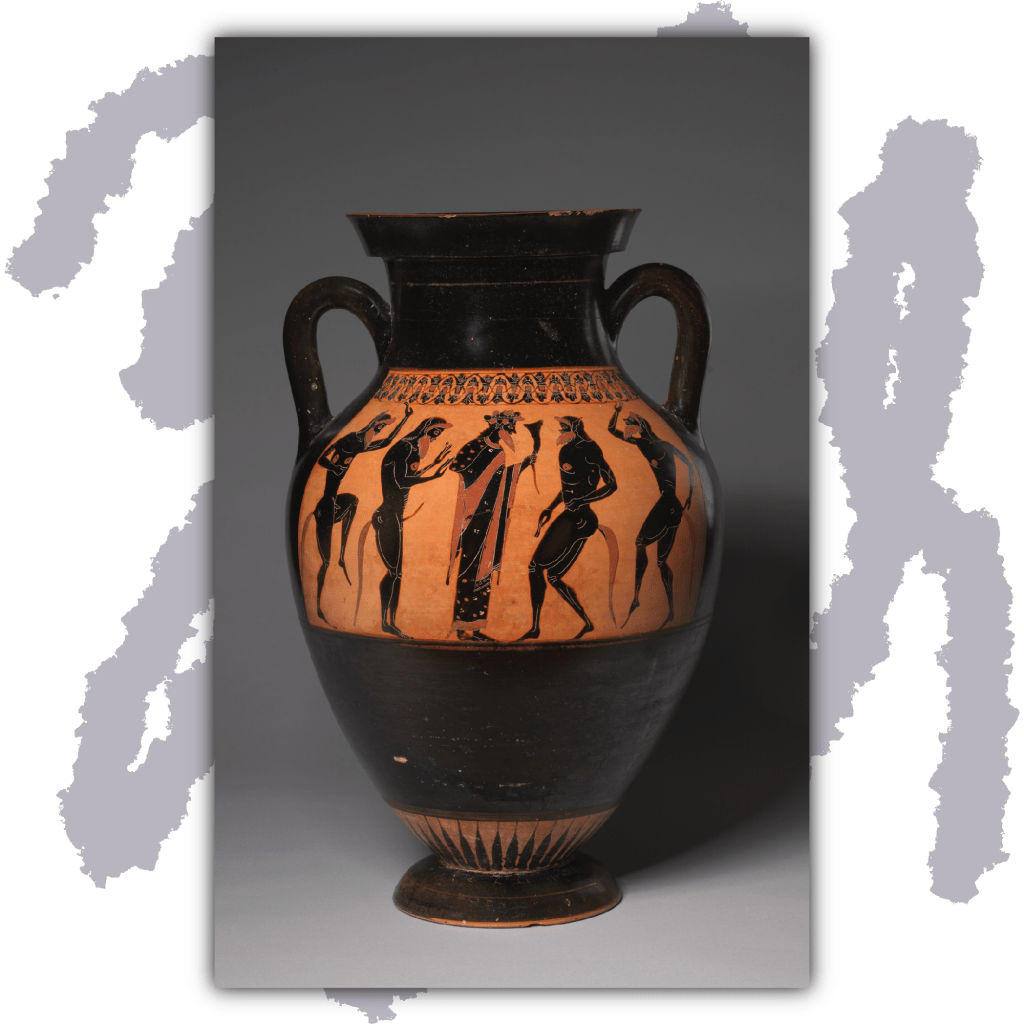
Red-figure pottery also involves using black paint, but the background is painted, as opposed to the subjects. This technique does not utilize carving for details, making it easier to capture complexity and facial expressions.

Classical (480-323 BC)
Athens dominated Greece after the defeat of the Persians in 479 BC. The Athenians created the first democracy and gained lots of wealth. During their reign, Greece saw many developments in art and architecture. A notable architectural achievement was the Parthenon, built in 432 BC. It was intended to be a temple dedicated to Athena. In terms of sculpture, the Classical period saw less rigid forms. Instead of stiff figures like the Kuoros and Kore, sculptors during this period gave their creations more fluidity and emphasized movement. Take Aphrodite of Knidos for example:

In general, artwork became more natural and realistic. Painters mastered linear perspective, shading, and the accurate capture of 3D forms. Pottery, which was very popular during the Archaic period, went into decline during the Classical period. Another change was the subjects of sculpture. Athens suffered in the Peloponnesian War, and as a result, sculpture subjects were more somber than before. Near the end of this period, Macedonia became the new superpower in Greece. Alexander the Great led Macedonia and his various conquests brought new influences to Greek art.
Hellenistic (323-32 BC)
After Alexander the Great’s death in 323 BC, land was divided up into kingdoms. Hellenistic royalty lived luxuriously and were proud patrons of the arts. Trade continued to flourish during this time period, and art diversified as a result. For example, jewelry diversified from new stones procured through trade.

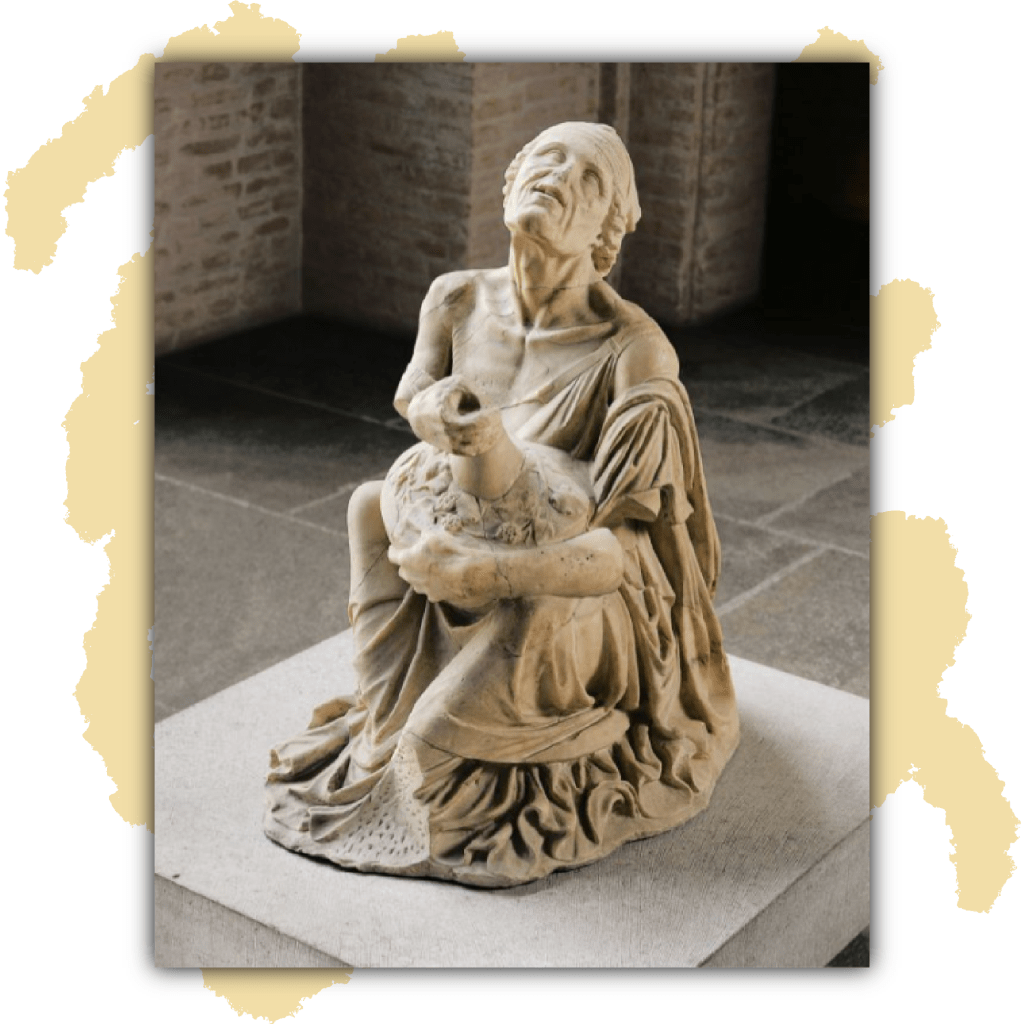
Even the subjects of art became more varied. Hellenistic art featured subjects of different ages and races, which was reflective of the many groups of conquered peoples living in Hellenistic kingdoms. In 146 BC, the Greek city states were conquered by Rome. However, Roman interest in Greek art allowed for Greek artistic culture to persist.
There is so much more to learn about Greek art. The masterpieces created in Ancient Greece range from metalwork to engraved gems to mosaics. The Greeks produced extraordinary work in every medium, and their art influenced other Western art to a great extent. When I visit Greece next year, I’ll be sure to visit museums like the Acropolis Museum and the Benaki Museum to see some of these amazing works in person.
References
Gondek, R. M. (2016, August 14). Introduction to ancient greek art. Smarthistory. https://smarthistory.org/greek_intro/
Greek art (c.650-27 BCE) history, characteristics. Greek Art: History, Characteristics. (n.d.). http://www.visual-arts-cork.com/greek-art.htm
Ancient greek. The Art Institute of Chicago. (n.d.). https://www.artic.edu/artists/2601/ancient-greek#
Image References:
File:A Kore and a kouros, two sphinxes and a grave stele. 6th cent. B.C.jpg – Wikimedia Commons
File:Clevelandart 1927.433.jpg – Wikimedia Commons
Pandora Vase (Illustration) – World History Encyclopedia
Hellenistic Jewelry | Essay | The Metropolitan Museum of Art | Heilbrunn Timeline of Art History
 the aesthete

